Friday, June 12, 2015

Vendetta

Vendetta
 
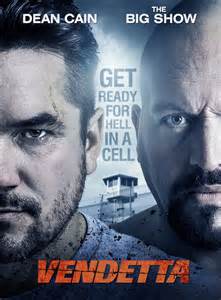
Vendetta is the second film the Twisted Twins Jen and Sylvia Soska have directed for WWE Studios after last year's See No Evil 2. It's about a cop, Mason Danvers (Dean Cain) who puts away a major criminal, Victor Abbot (The Big Show) who walks due to a disappeared witness. When the criminal kills the cop's wife, the cop murders the criminal's brother to get sent to jail as well so he can get revenge. It's a straight up action revenge story.
Dean Cain may have been good 'ol boy enough to play Clark Kent and all American enough to play Superman but that Dean Cain is not to be found in Vendetta. Cain is a relentless and determined force in this movie and he completely kicks ass. It was awesome to see this, he truly is an underrated actor. What's even better is that Cain still has that charm to make you care about him and immediately root for him.
WWE superstar The Big Show also does a great job as the villain of the movie. He just oozes evil and you want him to get what's coming to him. Him and Cain have a great chemistry in the movie and this is very important to the success of the film. It's one against the other in a good old fashioned revenge story and the viewer must believe the toxic relationship between the two and the actors deliver on this.
Vendetta is a very slick looking film and it moves at a brisk pace. The characters are introduced, the story kicks off, and the hell in a cell begins. The music in the movie has a simmering, tribal and industrial feel to it that adds to the building tension of the situation. The Soska Sisters also don't disappoint with the blood. Every gunshot and every knife attack and fistfight is met with nice spurts of blood and oozing cuts. There's a great scene where Mason kills a fellow inmate with brass knuckles. He holds a pillow over the inmates face and as he pounds it over and over again, the white pillow quickly turns red.
There are plenty of fight scenes in the movie and bravo to the Soska Sisters for effectively filming them. There are no blurred shaky-cam sequences with several nonsensical cuts that hide a lot of the action. Instead we get coherent and well choreographed fights that are a blast to watch. A highlight is when Mason Danvers fights a group of inmates in a laundry facility and uses a towel as a weapon. It's Dean Cain doing his best Jackie Chan and it's freaking awesome to watch.
Mason's cop instincts also play a part in the prison as he uncovers that things may not be as they seem with the warden and his relationship with Victor Abbot.
Vendetta is a wild ride, an action packed revenge story in a prison full of hardened criminals and corrupt officials. It's gritty yet slick and simple yet engaging. And it's entertaining as hell.

Wednesday, June 10, 2015

Dead Hooker in a Trunk (Classic Review)

Dead Hooker in a Trunk (Classic Review!)

I usually will only review new movies but today I am reviewing Dead Hooker in a Trunk from 2009 from the Twisted Twins, writer/directors Jen and Sylvia Soska. It's both to celebrate their new movie, Vendetta coming out June 12th, and because Dead Hooker in a Trunk is the first movie That One Review is calling a classic and it's first Classic Review!
The opening shot sets the stage for the character Badass (Sylvia Soska) as the camera follows her as she walks through a club surrounded by people and a band playing loud music. The character name 'Badass' is earned right away with this shot as she struts through the crowd with a confident I-don't-give-a-fuck swagger. There are a few other shots in the movie like this and I can confidently say that nobody walks like Sylvia Soska.
The film focuses on 4 friends who are running a mundane, everyday errand when they discover they have a dead hooker in the trunk of their car. From here they try to dispose of the body and are on the run from a “Street Walker Killer” and a pimp who wants his hooker back. The discovery of the hooker scene is capped off with Geek (Jen Soska) exclaiming, “there's a dead hooker in a trunk,” and that's what this movie is: fun, in your face, outrageous, and self aware.
It's in your face because the gore is heavy when it's called for, the blood splatters like a Jackson Pollack painting, and the violence is relentless. The music adds to the violence and creates moods that either intensify the scenes (like piano playing over a woman being beaten with a bat) or confuse your senses to oddly enjoy the mayhem and bloodshed, like playing Japanese pop/punk over people getting shot.
It's outrageous because we have a myriad of strange characters that populate the movie and a handful of scenes that throw logic out the window. We see sleazy cops, a motel manager who is very close to his sheep, and the “Street Walker Killer” has a secret that sticks a fork in his cocky demeanor. There is a scene where one of the friends, Goody Two-Shoes sews the arm back on the other friend, Junkie, after it's ripped off in a car accident.
All of this sounds outrageous because it is, and it all works in this movie because most importantly it is fun as hell. The Soska sisters are fans of the genre and they know what they can get away with in movies because they understand the fans who watch their product. They are fans themselves and their fantastic debut reflects this. It's bloody, violent, loud, fast, and funny. Geek is especially funny, her straight face delivery and physical humor had me laughing out loud.
The Soskas know how to let the camera capture a scene to make it the most effective it can be. There is a great shot that follows Badass (another kickass walking scene) as she walks up to the trucker that ripped her friends arm off with his truck, punches him, grabs the arm, and walks back to her car. She is the authority of the group and this shot tells us that. Another effective shot is towards the end when Badass is kidnapped and the viewer can feel the fear and the struggle as the camera lingers and slowly moves back and slightly from side to side as if wanting to help but being too afraid. It's great stuff that lends itself well to multiple viewings.
Finally, the film is very self aware with comments like, “I can't believe there are no repercussions for anything we did,” at the end of their dead hooker journey. There is also a little audience acknowledgment from Badass at the last second as she looks quick at the camera as if to imply she knew we were watching all along. This 'in on the secret' feeling has defined the relationship between the Soska Sisters and their fans throughout their career since their breakout cult hit. They always acknowledge their fans and their fans are severely loyal in return. It also helps to create loyal fans when you put out quality work like Dead Hooker in a Trunk. Go watch this one and become a fan.
And it has a pug.

Thursday, June 4, 2015

Model Hunger

Model Hunger

If there exists a dream choice to direct a low budget horror film, someone who has seen how the genre operates, knows the ins and outs of filming on the cheap, and has the talent and ability to demand solid acting performances, that dream choice is Debbie Rochon. If you were to watch one movie a week that had Debbie Rochon in it, you would have a movie every week for the next 4 and a half years. Rochon knows her stuff and she has become a legend for a reason. Now with Model Hunger she has her first credit as director to her name. And what a fantastic job she does.
Model Hunger stars Lynn Lowry as Ginny, a jaded former model/pin-up girl who now lives in a small town and preys on young, pretty girls as a form of revenge against her rejection from the modeling industry. When her new neighbors move in, Debbie and Sal (Tiffany Shepis and Carmine Capobianco), Debbie suspects some strange things happening next door and that Ginny is not the sweet old lady that she pretends to be.
If there is one factor in Model Hunger that could make or break the movie, it's the character of Ginny. Casting Lynn Lowry in the role was nothing short of a horror epiphany. She absolutely owns the role and is so good that I could not take my eyes off of her. She is both frightening and beautiful, at once a cannibalistic madwoman and sultry seductress who somehow manages to elicit a hint of sympathy from the viewer. It's a role that demanded a lot, a role that virtually had the weight of the movie on it's shoulders, and Lowry gives a mesmerizing performance.
Tiffany Shepis as Debbie gives another strong performance in the movie. Shepis is such a natural actress, she has the ability to make the viewer feel alone with her on screen as if we are not watching her through a camera but rather with our own eyes. She exudes an aura of sadness as the depressed, Rear Window playing Debbie and also a natural funniness that made her perfect for the part. An excellent cast was assembled for Model Hunger and with all the uphill battles faced by a low budget horror production that's a major hurdled cleared right there.    
The movie has a lot to say about image and the pressure on women to look a certain way. It works as a social commentary on the modeling industry and the unhealthy expectation it puts on women to be "tall and skinny," as one young character describes beauty in the movie. Model Hunger is a movie of extremes: inner beauty or outer beauty and the seeming struggle for the two to coexist. The TV show within the movie, "Suzi's Secret", promotes plus size lingerie and inner beauty and feeling beautiful no matter what is one extreme. It focuses on their very plus size model (convincingly played by Babette Bombshell) who is continuously dancing and constantly eating and destroying her body through gluttony. The other extreme is the beautiful Ginny who is so deranged and broken and ugly inside that she literally puts beautiful young girls inside her by killing and eating them. The Ginny character encompasses the danger of the modeling industry itself, as it consumed her life and ruined it as a young woman, she now ironically consumes young, beautiful girls.
The film itself looks great, it has a very sharp and colorful appearance to match the emphasis it puts on image. It's briskly paced and smartly blends the disturbing elements with the playful and is damn fun to watch. There's also a nice touch to start with a little blood and gore and then show more and more as the movie moves along and the tension builds up, like a cut itself that refuses to clot. And Rochon does not shy away from the gore, she shows the pain and blood and cuts and as your toes curl, toes literally curl onscreen as well.
One choice I absolutely loved was Harry Manfredini doing the score for Model Hunger. It has a subtle recall to Friday the 13th which I thought was brilliant as Lynn Lowry's sinister Ginny took her revenge out on these young girls just as Betsy Palmer as Jason's mom did to the teens at Crystal Lake. It was a nice observation that had me smiling.
 Rochon is the dream choice to direct a low budget horror movie because she knows the world behind closed doors, she understands the darkness of the mind and what's in the shadows that surround us in the light of everyday life. She sees the danger in the details of things ignored, like the prolonged creaking in Ginny's front door as it opens to her house of horrors. She knows that violence knows no boundaries as Ginny pummels a girl with a tire iron on the side of a peaceful country road. Most importantly, Rochon as a director knows how to capture all of that and I was impressed as hell with her effort here.

Tuesday, June 2, 2015

Zombeavers

Zombeavers

Horror is the only genre that can poke fun at itself and not be called a parody or a spoof. The horror-comedy is a genre all it's own at this point but it is not easy to pull off, one must know the genre well and have solid timing on the comedy and know when to play up the horror. The filmmakers behind Zombeavers definitely know both comedy and horror and they execute these forms perfectly and the end result is one hell of a fun film.
Zombeavers starts off with a hilarious set up to create the zombie beavers (I won't spoil it here) and is followed by a fantastic opening credit sequence that mixes live action shots with animation and it's one of the coolest openings I've seen in a long time. It's the perfect set-up for the film that follows. We are then introduced to 3 girls on their way for a weekend of fun at a lake house out in the country. The trio are very likeable and come across as real girls instead of just characters to be chased and killed. They are naive without being dumb and have a playful chemistry amongst them. The dialogue is well written and sounds like real language and I was invested from the beginning. Rachel Melvin is probably the standout amongst them, she has a real "girl next door" quality and Cortney Palm has a fantastic comedic delivery.
A bit later in the movie boys inevitably show up to crash the girls' weekend getaway. While not as well developed, the guys are just as funny as their lady counterparts and also bring some extra storylines into the development of the group's history as friends. I thought the little extra effort taken to establish some character depth and show how the group ties together as a whole and as friends was great to see. This isn't always the case with horror as we often are thrown a handful of stock characters that we don't care about. The character relationships help make the characters that much more real amidst the seemingly impossible surroundings of zombie beavers.
Obviously the zombie beavers are an extremely important element in the film, and their appearance and technical execution could make or break the production. If they are lousy CGI will they be believable and accepted? What do zombie beavers even sound like? How do they move? Luckily, the filmmakers created the perfect zombie beaver for the film. Everything about the world of the movie is ultimately believable, except the zombie beavers, of course. There are no over the top crazy backwood hillbillies and there is no wild life expert in the group who knows just what to do. So would a slow lurking, quietly gurgling, bloody zombie beaver stand out much? No. There's a saying that says if you're going to lie, lie big. If Zombie beavers can't really exist, then lie big to make them real! These practical effect zombie beavers are bug eyed, crazed, fast moving, screeching, relentless terrors and they elicit real fear from our group of doomed protagonists. That is the main reason why this film works so much: it sets up the real world and when the reality of zombie beavers is introduced into it they are so absurd and over the top and are met with serious fear from the characters that the audience buys into it. If the characters take them seriously, so will the audience.
The music in the movie also helps create the humor filled yet serious tone as well. It quietly plays in the background and seems overly dramatic during touching or dramatic moments and turns serious during frightening moments and it helps create that hint of something over the top lurking just around the corner. From the visual to the writing to the audio, nothing was missed by the production team and it all comes together for a fantastic humor filled horror story. I definitely recommend Zombeavers, you won't be disappointed!
Also, stick around for the Sinatra-esque Zombeavers song that plays over the closing credits. Classic.    

Wednesday, May 27, 2015

Axe to Grind

Axe to Grind

The story of Axe to Grind is a bit meta in it's approach. The movie is about an aging B-movie scream queen named Debbie (played by low budget horror legend Debbie Rochon) who has found out that she has been cut out of her latest horror movie to make room for a trio of new, young, fresh faces. To make matters worse, the producer of the movie is Debbie's former husband and he is now sleeping with a much younger new scream queen. Debbie doesn't take all of this very well and like the film title states, she has an axe to grind.
The movie within the movie that is being filmed is called Bayou Butcher yet it is being filmed in a hospital. When one of the actresses asks, "won't the audience wonder where the bayou is?" the director tells her that, "if the audience is wondering that, then you're not doing your job working those ta ta's." The cocky director is also very proud of the minor recognition he has received, proudly announcing at one point his "Best Director, Scream Fest 2012" award. This is the world the film creates for itself, an extremely self aware and mocking view of the low budget horror movie business. The film knows the stereotypical production  aesthetics behind the genre and plays them up. For example, one scene is a pre-filming party full of drinking and a lack of respect for the material whereas another scene is used to introduce the three new young stars of the film in a playful and fan friendly way. This scene shows each actress individually and it freeze frames on them and displays the films they are known for thus far with such fun titles as "Blood Orgy", "Exorcist Nymphs", and my personal favorite, "I Deficate on Your Grave". It's a fun moment for sure, and a moment that all horror fans will enjoy and relate to.
The production value of Axe to Grind is a bit of a mixed bag. While this is to be expected with low budget horror, it didn't always feel consistent here. The film has a nice glossy, sharp look to it but the lighting seemed to wash out some of the scenes and color the actors with a harsh appearance. This lighting happens more so in the beginning third of the movie. Also, there is some CGI blood splatter used whereas other scenes use practical effects and real blood. The practical effects here are very well done, (lots of axe killings going on) and that just serves to make the CGI splatter more noticeable. But this is more of an observation than a complaint.
But I want to get to the real reason why this movie works: Debbie Rochon. This is her show and her performance is full of vengeful energy and crazy fun. She is horror legend for a reason and this movie demonstrates why. Rochon always has a bit of crazy in her eyes, a mad spark that can spread to flames in the time it takes for her to lower a knowing smile. This role is close to Debbie Rochon herself, a low budget horror icon who has been around for decades at this point and has earned respect through the work she has done and career she has built. With horror being filled with one twenty-something after another, the faces begin to blur together. Not many females age with the genre and stay relevant, they fall victim to the exact thing that Axe to Grind presents: fresh young faces. The character Debbie may have to resort to the bloody violence she has only portrayed on screen in order to get a sense of redemption and hold onto the spotlight. But Debbie Rochon need only continue to be who she is to stay relevant: a serious actress giving fearless performances.
After all, when her character is introduced in the movie, the freeze frame flashes "The Meryl Streep of Horror". That's not for her character, that's for Debbie Rochon.
Check out Axe to Grind for a meta, bloody good time.


Wednesday, May 20, 2015

Late Phases

Late Phases

Late Phases tells the story of Ambrose McKinley, a blind, aging Vietnam War vet (superbly played by Nick Damici) who moves into a retirement community only to find out that it is preyed upon every full moon by a blood thirsty werewolf who lives in the neighboring woods. In fact, the very first night Ambrose moves in happens to be the full moon and he hears his neighbor get brutally killed as well as his seeing eye dog, Shadow. And just like that the story is off and running.
The opening shows little of the werewolf and focuses more on it's silhouette and blood curdling scream. There are just enough quick cuts to show the creature's teeth but the rest is left to the imagination. The scream and growling here are very effective and downright terrifying, they go right to the center of your bones and stay there.
From here the movie slows down and starts unfolding it's story, which plays out like a whodunnit with Ambrose meeting some of the townspeople and sizing them up like a detective. He even reminded me of an aged Humphrey Bogart trying to crack the case of who or what is the werewolf. One of these townspeople and suspects is Father Roger, portrayed expertly by the cool Tom Noonan. The relationship between these two is one of mutual respect, mutual curiosity, and mutual suspicion. It's great fun to watch Damici and Noonan converse with each other with some strong dialogue to really showcase their talent. Another relationship the movie offers is between Ambrose and his son, Will (Ethan Embry). There's more great character development on display here as we learn about the troubled and strained but quietly loving father son relationship that really raises the stakes of the movie. A very cool original score and some all around solid acting  top off the unraveling of Late Phases as it heads into it's final act.
There's some interesting atmosphere and themes playing out here as well. The lighting in the film during the day always seems to be at the time of sunset, that early sunset when the lighting is very yellow. I couldn't help but see the yellow from a full moon, that rich color of a full Harvest Moon. I found this to be a nice touch, whether it was purposefully done or just a creation in my mind.
A theme in the movie might be a play on the title itself, Late Phases. Ambrose is a broken man from Vietnam, saying in one scene that he, "went there to save people," but he lost himself instead. This final act in his life is a chance at redemption, a chance to save the town from the werewolf. Not only does this climax during the late phases of the moon, but also the late phases of Ambrose's life.
The werewolf returns in the end for the big finale and there is a transformation scene where we see the creature turn and it is some wonderful camera movement used to heighten the effect as it glides around the room and to the creature showing it as it pans by and glides back across the room and to the onlooking character and back to the creature. It's a dizzying sense that matches what is happening as the werewolf comes out and it is a joy to watch.
The only two minor problems I had with the film happen at this point. I felt the finale was a bit rushed, I wanted more of the werewolf and it's nightmare inducing scream and startling quick movements and it seemed over quickly. The other issue is the look of the werewolf itself. The camera settles more on the beast in these scenes and we get to see it's face longer. While I won't complain too much about a low budget, independent horror films special effects because I know they use every dollar they can, I was hoping for more of a make-up created werewolf as opposed to a mask looking werewolf. Let me stress that this was a minor issue for me, I just felt it was set up so well and mysteriously in the beginning that I guess it couldn't live up to that standard.
Overall I really enjoyed watching Late Phases and dug the whole whodunnit angle mixed with a werewolf story. I applaud the filmmakers for taking their time to tell a character driven story with strong performances, something horror needs more of. Go watch Late Phases and try not to hear that werewolf scream while you try to sleep at night.

Wednesday, May 6, 2015

Lost Soul: The Doomed Journey of Richard Stanley's Island of Dr. Moreau

Lost Soul: The Doomed Journey of Richard Stanley's Island of Dr. Moreau

There are some stories that seem tailor made to be adapted to the big screen. And there are some movies that create instant interest as soon as they are announced. The Island of Dr. Moreau seems like one of those stories. And it seems like one of those movies. Of course, for anyone who saw The Island of Dr. Moreau (1996), and not many did ($27 million total domestic gross), they quickly discovered it was NOT one of those movies.
While the movie itself turned out to be a complete mess and a destined box office bomb released in the no mans land of late August in the summer of 1996, the struggle behind the making of The Island of Dr. Moreau is where the true story of this film lies. And it's a doozy.
Richard Stanley was a visionary filmmaker on the rise in the early 1990's making the cult classics Hardware and Dust Devil. Dr. Moreau was supposed to be his big step into the limelight, a studio backed big release where the filmmaker could showcase his visionary talent. Lost Soul shows us early set designs and storyboards from Stanley himself and they seem to differ greatly from Dr. Moreau's final product, with the directing duties taken over by John Frankenheimer after Stanley was kicked out. Stanley's version seemed to want to focus more on the animals of the story instead of the humans, and it looked to be much darker and bizarrely fascinating.
Lost Soul brings in actors from the film who share their stories and versions of what happened on the set of Dr. Moreau. Most notably Fairuza Balk and Fiona Mahl, who provided Lost Soul with home movie footage of the cast and crew sitting around in hotel rooms drinking and smoking pot, almost all of the time in costume and makeup because just maybe they would film some scenes that day. It is frightening and hilarious to see these actors made up in their creature costumes just hanging around with other people doing very human things. Perhaps these home movies is where the true Dr. Moreau lies.
Lost Soul also gets to the true heart of the problems for The Island of Dr. Moreau: the casting of Marlon Brando and Val Kilmer, two Hollywood actors with egos larger than the island itself. Plenty of time is spent on the shenanigans of these two, from Brando not memorizing his lines (at all) and demanding an ice bucket be placed on his head while in character as Dr. Moreau, to Kilmer refusing to come out of his trailer for filming until Brando did first. And vice versa.
The original pick for director of Dr. Moreau, Richard Stanley, the centerpiece of  Lost Soul, is quite an odd character himself. From stories of him refusing to leave a tree house on set to stories of witchcraft, he seems to fit right in with the behind the scenes circus that was the filming of The Island of Dr. Moreau. He does come across as the victim of all of this however, and the viewer does feel for him and is left wondering what could have been.
The audience responded greatly to the film, laughing at the crazy stories being told, the home movies being shown, and the childish, bratty behavior of Marlon Brando and more so Val Kilmer. It was funny though that when Lost Soul focused for a moment on Brando and his insistence to wear white makeup all over his face during Moreau's big entrance scene that it was played for laughs, just another strange request from Brando, and the audience laughed at it's absurdity. However, after the screening, director David Gregory said that Stanley and Brando discussed wearing the white makeup as part of the Moreau character and I heard some audience members ooh and ahh as if to say, "how cool". And yet without that knowledge they laughed at Brando. That's when I thought Lost Soul perhaps did TOO good a job of getting the audience firmly behind Stanley and Stanley only. But that was a minor observation on my part from the audience.
Lost Soul is definitely worth checking out. It is a very well made and very entertaining documentary about just how wrong making a film can go. It's also great to go behind the scenes with former studio heads and actors and filmmakers and see what goes into making movies. I had a wonderful time watching Lost Soul and it really left me wanting to see Richard Stanley's Island of Dr. Moreau. Bravo to Severin Films for such a well put together and interesting film.
On a side note, seek out and watch the 1996 Island of Dr. Moreau. It is a mess of a movie, but a fascinating mess at that. Watching Brando and Kilmer is like seeing the patients run the asylum. It would be a great double feature with Lost Soul.
And Kilmer impersonates Brando. That's worth watching right there.